Your Renters Are Using AI to Fight Deposit Deductions. Here's What I Learned From a Manager With 1,250 Doors.
Renters are using AI to fight deposit deductions with legal-grade demand letters. Your defense: bulletproof move-out documentation and supervised AI adoption. Process beats technology every time.
TL;DR: Renters are using AI tools like ChatGPT to fight security deposit deductions with professionally formatted demand letters. Property managers need bulletproof documentation (timestamped photos, condition assessments, comparison reports) and supervised AI adoption to stay competitive. Process design matters more than technology alone.
What property managers need to know:
- 30% of rental disputes involve security deposits, and AI has given renters free legal assistance
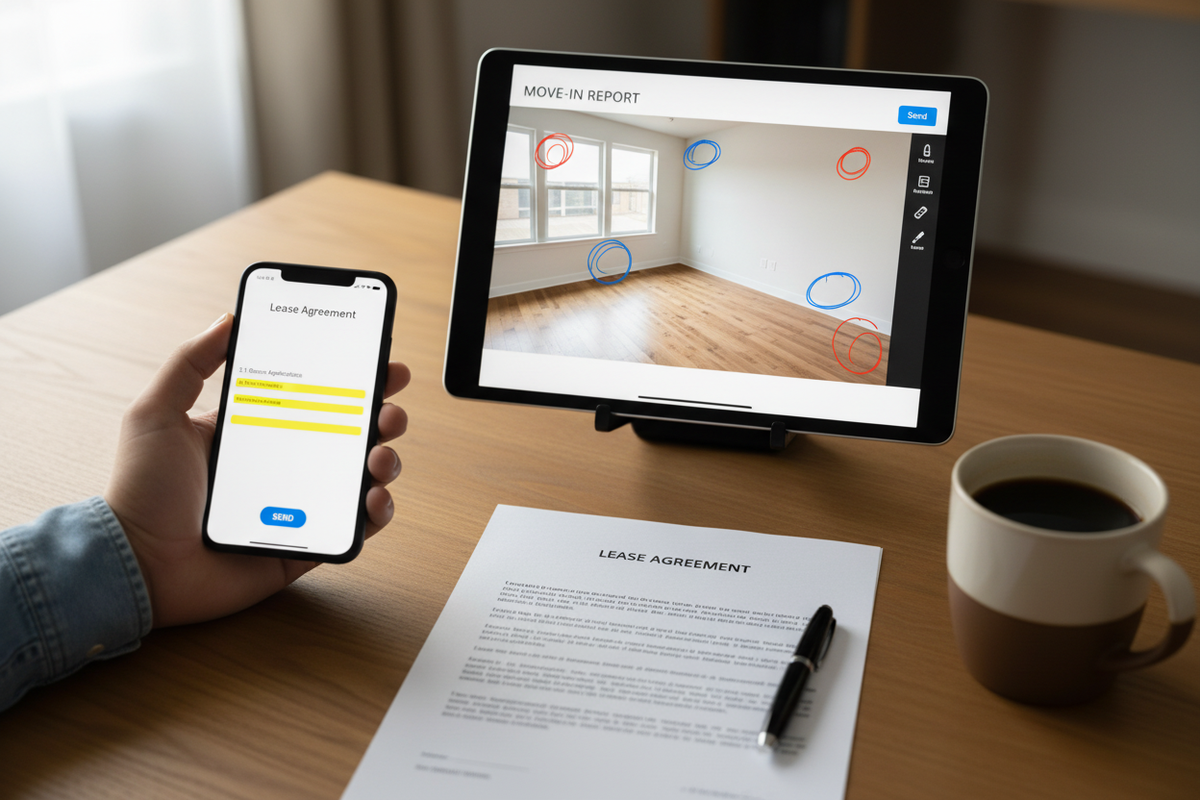
- Winning documentation requires timestamped photos, detailed condition assessments, and automated comparison reports
- 34% of property managers now use AI (up from 21% last year), but supervised deployment is critical
- Process breakdowns—not people problems—cause most operational failures
Jeremy Tallman has managed over 1,250 single-family rental doors in Indianapolis for nearly two decades. When Jeremy notices a trend, I pay attention.
The trend he flagged? Renters are using AI to fight security deposit deductions, and most property managers aren't ready for it.
The trend he flagged? Renters are using AI to fight security deposit deductions, and most property managers aren't ready for it.
How Are Renters Using AI Against Property Managers?
"It feels like they're using ChatGPT," Jeremy told me. "We're getting people coming at us using similar language, hitting the same points, filing the same types of small claims actions. They're getting very aggressive and using technology to bolster that effort."
Why This Changes Everything
As many as 30% of rental disputes are over security deposits. AI has fundamentally changed the calculation because a renter who once couldn't afford an attorney now has a free legal research assistant available 24 hours a day.
This mirrors a pattern the industry has lived through before. First came application fraud with fake pay stubs. Then fabricated emotional support animal letters. The toolset evolves. The target shifts. Right now, it has shifted to the move-out process.
Bottom line: AI has democratized legal knowledge that was once expensive and inaccessible, making security deposit disputes more frequent and sophisticated.
What Documentation Do Property Managers Need to Win Deposit Disputes?
Jeremy's response has been straightforward: documentation that's impossible to argue with.
The Documentation Standard
"Security deposit disputes take up a lot of time because there's a lot of research that has to happen to prove the deduction, even though we've already done it through photo documentation," Jeremy said.
The core principle: if a renter can bring a well-formatted legal demand letter to any dispute, your documentation needs to be equally bulletproof.
3 Essential Documentation Components
Here's what bulletproof documentation looks like:
- Timestamped photos at move-in and move-out. Not just photos. Photos with date stamps and condition ratings that create an irrefutable record.
- Detailed condition assessments. Documentation that flags damage and wear patterns with consistency.
- Automated comparison reports. Side-by-side visuals showing exactly what changed between move-in and move-out.
Critical insight: Poor documentation creates vulnerability when renters arrive with AI-generated demand letters citing specific statutes and automatic forfeiture provisions.
How Should Property Managers Structure Their Operations?
The security deposit story is really about process design. This is where Jeremy's broader insight becomes valuable.
The Problem with Generalist Operations
T&H Realty didn't start as a specialized operation. For years, Jeremy and his co-founder did everything.
Over time, cracks appeared:
- Leads went unreturned
- Applications processed too slowly
- Tasks fell through the cracks
The solution: hire around process gaps, not utilization.
"Look at your business critically and say, we have a weakness here. We need staff for it, or we need technology for it. You feel the pain point. You start seeing slippage. Then you react," Jeremy explained.
Today, T&H has someone whose entire job is managing utilities. It sounds extreme until you realize the alternative is that task living in the margins of a dozen job descriptions, half done and inconsistently executed.
Jeremy's 4-Part Framework for Role Specialization
1. Define the Seat Before You Hire the Person
Process first, then people. "You can't force a process around a person. You sacrifice quality. You get more errors."
Document the role, responsibilities, and success metrics before posting the job.
2. Distinguish Process Breakdowns from People Breakdowns
When something fails, ask whether the process had a hole or the person dropped the ball. Jeremy finds it's usually the former.
If three people make the same mistake in the same role, you have a process problem, not a people problem.
3. Use Scorecards, Not Just Job Descriptions
T&H gives new hires a scorecard at the start: here's what success looks like, here's the timeline, here's how you'll be evaluated.
Job descriptions tell people what to do. Scorecards tell them what winning looks like.
4. Give Your Team a Living Knowledge Base
When your standard operating procedure is four years out of date and someone follows it, that's a leadership problem, not a people problem.
Key takeaway: Specialization works because it prevents critical tasks from living in the margins of multiple job descriptions where they get executed inconsistently or not at all.
How Should Property Managers Use AI?
The Current Reality at T&H Realty
Jeremy was candid about T&H's AI adoption. They use ChatGPT regularly, including to draft legal documents their attorney then reviews.
The result: a $400 drafting bill becomes a fraction-of-an-hour review fee.
But he hasn't identified any role AI will eliminate.
AI as Force Multiplier, Not Replacement
"It's a turbo booster. It makes you do your job better. It gives you information faster. But right now we're not seeing it eliminate anything," Jeremy said.
"If we just let AI run unfettered in your property management company, you're probably crashing into a lot of things. You just don't see it."
The Supervised Deployment Approach
The right approach requires:
- Full visibility into what AI is doing
- The ability to intervene when needed
- A gradual expansion of autonomy as trust is earned
This matches industry trends. Thirty-four percent of property management professionals now use AI, up from 21% last year, according to AppFolio's 2025 Benchmark Report.
The verdict: Operators who treat AI as a force multiplier rather than a threat will write the next playbooks.
What Should Property Managers Do Now?
The renter community is becoming more sophisticated faster than most operators expect. AI has democratized access to legal knowledge that was once expensive and inaccessible.
That same AI is available to you.
The operators who build tighter documentation processes, smarter role structures, and more intentional technology adoption will have a meaningful advantage.
The Continuous Improvement Mindset
Jeremy has been doing this for nearly 20 years and still describes his company as in iteration mode. The playbook is never finished.
The operators who will set the standard:
- Define the seat before hiring the person
- Document property condition like they expect to be challenged in court
- Treat AI as a force multiplier, not a replacement
The renters using AI to challenge your deposit deductions aren't waiting. They're already here. Your documentation process needs to be ready for them.
Frequently Asked Questions
How are renters using AI to fight security deposit deductions?
Renters are using AI tools like ChatGPT to generate professionally formatted demand letters that cite specific landlord-tenant statutes, reference automatic forfeiture provisions, and outline paths to double damages in court. This gives them access to legal knowledge that was previously expensive and inaccessible.
What percentage of rental disputes involve security deposits?
As many as 30% of rental disputes are over security deposits. This makes it one of the most common sources of conflict between property managers and renters.
What documentation do property managers need to win deposit disputes?
Property managers need three essential components: (1) timestamped photos with date stamps and condition ratings at move-in and move-out, (2) detailed condition assessments that flag damage and wear patterns consistently, and (3) automated comparison reports showing side-by-side visuals of what changed during the tenancy.
How many property managers are currently using AI?
According to AppFolio's 2025 Benchmark Report, 34% of property management professionals now use AI, up from 21% the previous year. This represents a 62% year-over-year increase in AI adoption.
Will AI replace property management jobs?
No. AI is functioning as a "turbo booster" that makes property managers more efficient rather than replacing them. The technology is best used for tasks like drafting documents, automating routine processes, and providing faster access to information, but it requires human oversight and judgment.
What is supervised AI deployment in property management?
Supervised AI deployment means maintaining full visibility into what AI is doing, retaining the ability to intervene when needed, and gradually expanding AI autonomy as trust is earned. This prevents errors that occur when AI runs "unfettered" without human oversight.
Should property managers hire specialists or generalists?
Property managers should hire around process gaps, not utilization. Specialization prevents critical tasks from living in the margins of multiple job descriptions where they get executed inconsistently. Define the role and process first, then hire the person to fill it.
How can property managers defend against AI-generated legal demand letters?
The defense is bulletproof documentation. If renters can bring well-formatted legal demand letters to disputes, property managers need equally strong documentation with timestamped photos, detailed condition assessments, and automated comparison reports that make deductions impossible to argue with.
Key Takeaways
- AI has armed renters with free legal assistance. 30% of rental disputes involve security deposits, and AI tools now give renters access to professionally formatted demand letters and legal research that was once expensive and inaccessible.
- Documentation is your only defense. Property managers need timestamped photos, detailed condition assessments, and automated comparison reports to defend against AI-generated legal challenges.
- Process problems look like people problems. When multiple people make the same mistake in the same role, you have a process breakdown, not a hiring issue. Define the seat before you hire the person.
- AI adoption is accelerating rapidly. 34% of property managers now use AI (up from 21% last year), but the winning approach is supervised deployment, not unfettered automation.
- Specialization beats generalization. Hiring around process gaps prevents critical tasks from falling through the cracks of multiple job descriptions.
- The playbook is never finished. Even operators with 20 years of experience describe their companies as in iteration mode because renters and technology continue evolving.
Jeremy Tallman is co-founder and CEO of T&H Realty Services, managing 1,250+ single-family doors across central Indiana. This conversation was recorded on PM Playbooks.